Visible.
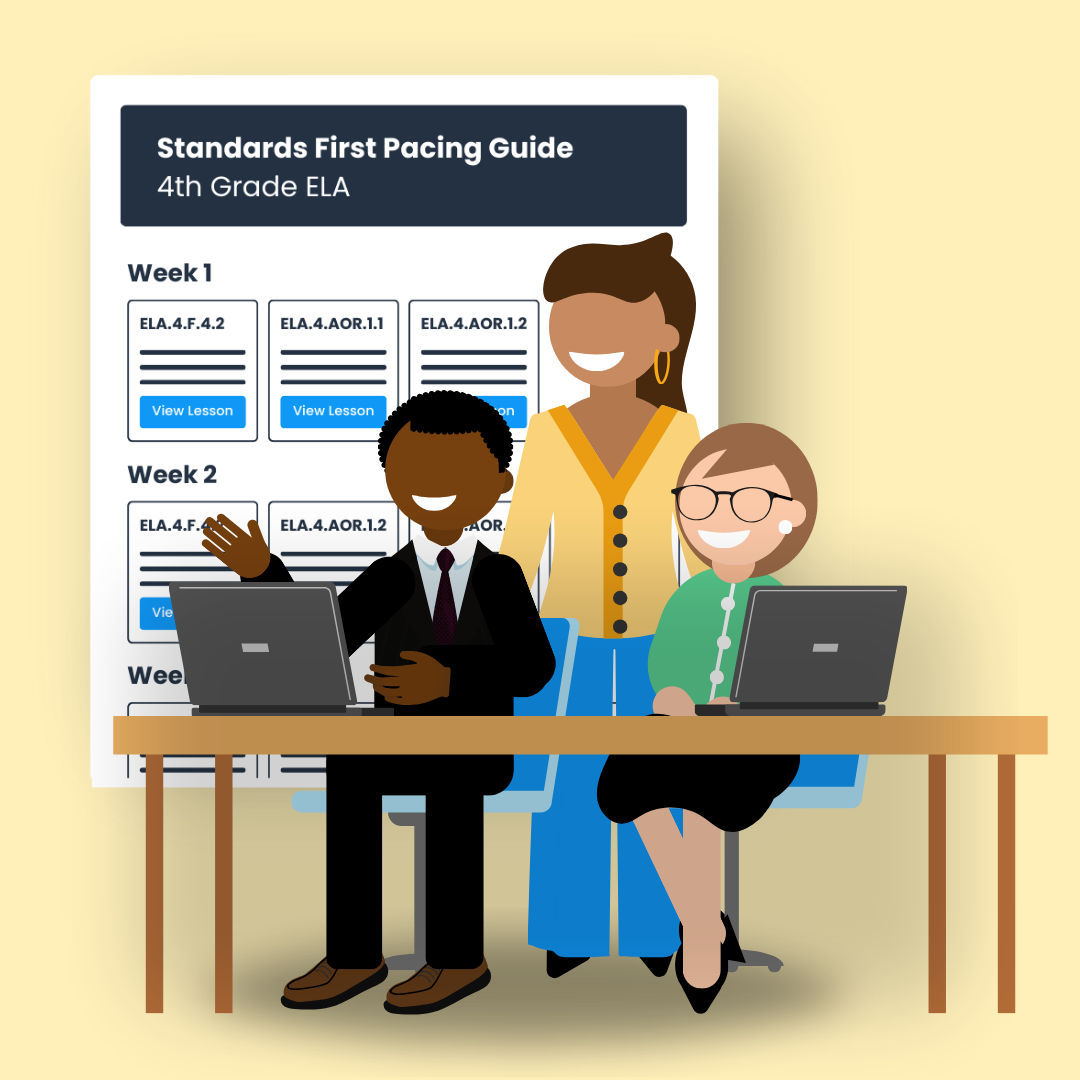
Teachers walk into class knowing exactly what each standard expects.
Meeting grade level standards is very complicated. Dot It is the K-12 platform that makes standards visible, teachable, and measurable all one page so your teachers and students can meet standards daily.
There are too many steps between a standard and a student learning it.
Schedule a demo→Teachers work hard every day and still wonder what each standard really expects.
Teachers are left to piece together the lesson and student practice on their own. No wonder they feel overwhelmed.
Leaders feel unsure whether students are meeting the standards. They find out months from now, not today.
In your programs, standards are listed on the lesson.
In Dot It, the standards are the lesson.
Teachers walk into class knowing exactly what each standard expects.
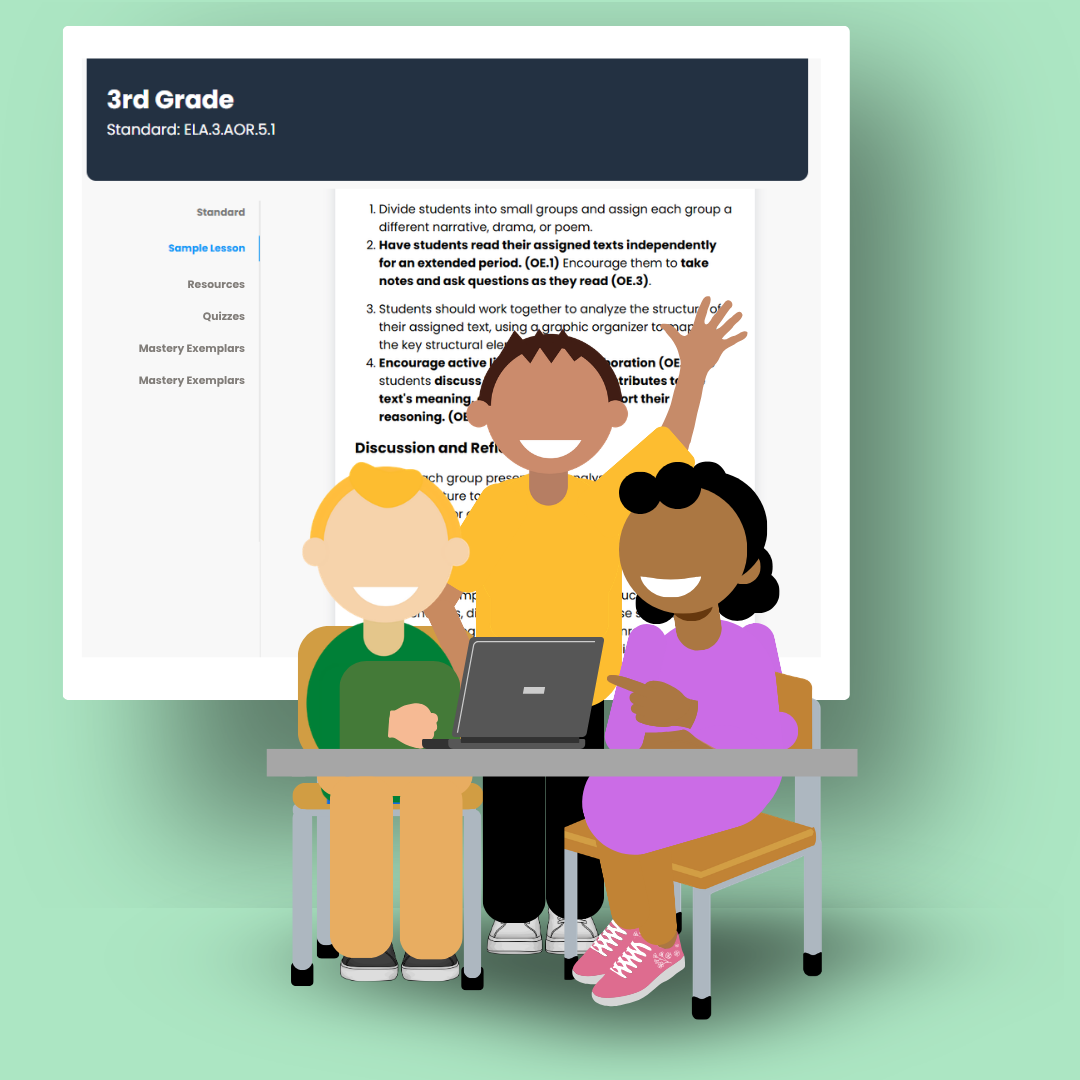
Teachers have lessons, slides student practice and HQIM in one click.

Daily quizzes and assignments show standards mastery before it’s too late.
From special educators to district leaders, from small to large, schools use Dot It to bring clarity, connection, and consistency to grade level teaching and learning for everyone daily.
of Dot It users reported clearer standards through pacing guides and lessons
of Dot It users said daily assessments kept state expectations in focus
And you still can’t tell if students are meeting the standards.
And you still wait months for test scores to find out what students learned.
And you answer for results you couldn’t see coming.
Meeting standards shouldn’t be this hard. With Dot It, it won’t be.
Schedule a demo →A practical walkthrough for school leaders who want to see whether standards are guiding the work happening every day.
Your programs cover the standards. But covering a standard and students meeting it are not the same thing. In most programs, the standard is listed on the lesson, and teachers still have to work out what it really expects. Dot It starts with the standard itself, so teachers can see it, teach it, and measure it every day.
You have the pieces. They just live in different places. Teachers spend hours lining up the pacing guide, the lesson, and the test, and hoping they all match the standard. Dot It puts all of it on one page for each standard. Less searching. More teaching.
Right now, most leaders find out when the scores come back. By then it’s too late to help. In Dot It, daily quizzes and assignments match what the state test expects, and reports update every day. You know where students stand today, while there is still time to act.
Teachers keep working hard, and the work stays complicated. They keep piecing lessons together from many tools and documents. Leaders keep waiting for state test scores to find out what happened. And students miss practice on the standards they are expected to meet. Nothing is wrong with your people. The path from a standard to a lesson just has too many steps.
High quality materials are built to support the standards. Dot It is built from them. In your programs, the standards are listed on the lesson. In Dot It, the standards are the lesson. Your materials still matter. Dot It connects them to the standard they support, so teachers know why they are using them.
No. Dot It works with what you already have. Your district resources are connected to the standards they support, right on the same page. Teachers find your programs and Dot It lessons in one place. And when your own resources don’t quite connect to a standard, Dot It has resources that do.
It means we start with the standard, not a textbook. We look at what your state standard asks students to know and do. Then the lesson, the practice, and the quiz are built to match it. Nothing is written first and labeled with a standard later.
Benchmark tests come a few times a year and cover many standards at once. By the time results arrive, the class has moved on. Dot It quizzes happen daily. Each one checks the standard students are working on, at the level the state test expects. Teachers see who needs help today, not months from now.
Because teachers shouldn’t have to hunt. Today, what a standard expects is in one document, the lesson is in another, and the test is somewhere else. On one page, a teacher can see what the standard expects, teach it, and check it. And everyone on the team is looking at the same thing.
No. It takes work away. The pacing guide, lessons, slides, student practice, and quizzes are ready when teachers sign in. They no longer have to build them or line them up on their own. More practice for students. Less work for teachers.
They start with the standard. A teacher opens the page for today’s standard and sees what it expects. They teach the lesson, give students practice, and finish with a quiz. Then they see who met the standard and who needs more help. Good teaching stays the same. The path just gets clearer.
Yes. Dot It gives teachers one place to organize their own lessons, activities, and quizzes around each standard. Teachers keep their style and the lessons they love. Dot It shows how each one connects to the standard, and fills the gap when one doesn’t.
Not long. Dot It was built by former educators to be simple. Pick a standard, and everything you need is there. Your team also gets four live virtual sessions to get started, short videos to watch any time, and a 24/7 help desk when questions come up.
We hear this worry, and as former educators, we get it. Dot It is about the standards, not about scoring teachers. The reports show where students are on each standard. So the question becomes “Where do students need help next?” and not “Who is doing it wrong?” That is a conversation teachers want to have.
It shows you where to look. Dashboards show standards teaching and student performance as it happens, so you can act on today’s classrooms and not last month’s report. Coaches can tie every conversation to a standard and keep a record of the work. Support gets specific, and teachers get help sooner.
Title I funds are meant to help students meet grade level standards, and that is exactly what Dot It is built to do. What qualifies depends on your district’s plan and your state’s rules. On a demo, we can walk through how Dot It fits your plan.
Dot It is built from your state’s standards, not a one-size-fits-all set. Pacing guides, lessons, and quizzes match what your state expects and how your state tests it. Schedule a demo and we’ll show you Dot It with your state’s standards.
You’ll see where students stand right away, because usage and proficiency reports update daily. Growth on the state test takes longer, and every district is different. Dot It users have seen end-of-course proficiency rise from 43% to 81% in one semester. One district raised its test scores for the first time in 13 years.
Three steps. Schedule a demo, and in 30 minutes we’ll show you how Dot It works. Choose your schools. Then start meeting standards daily. We help along the way with four live virtual sessions, short videos, and a 24/7 help desk.
Dot It puts everything teachers need for each standard on one page, so everyone can meet standards daily. Schedule a demo and see Dot It for yourself.
Schedule a demo →
Helping your teachers practice standards daily.